Study Abroad Trips and Ethnographic Field Schools
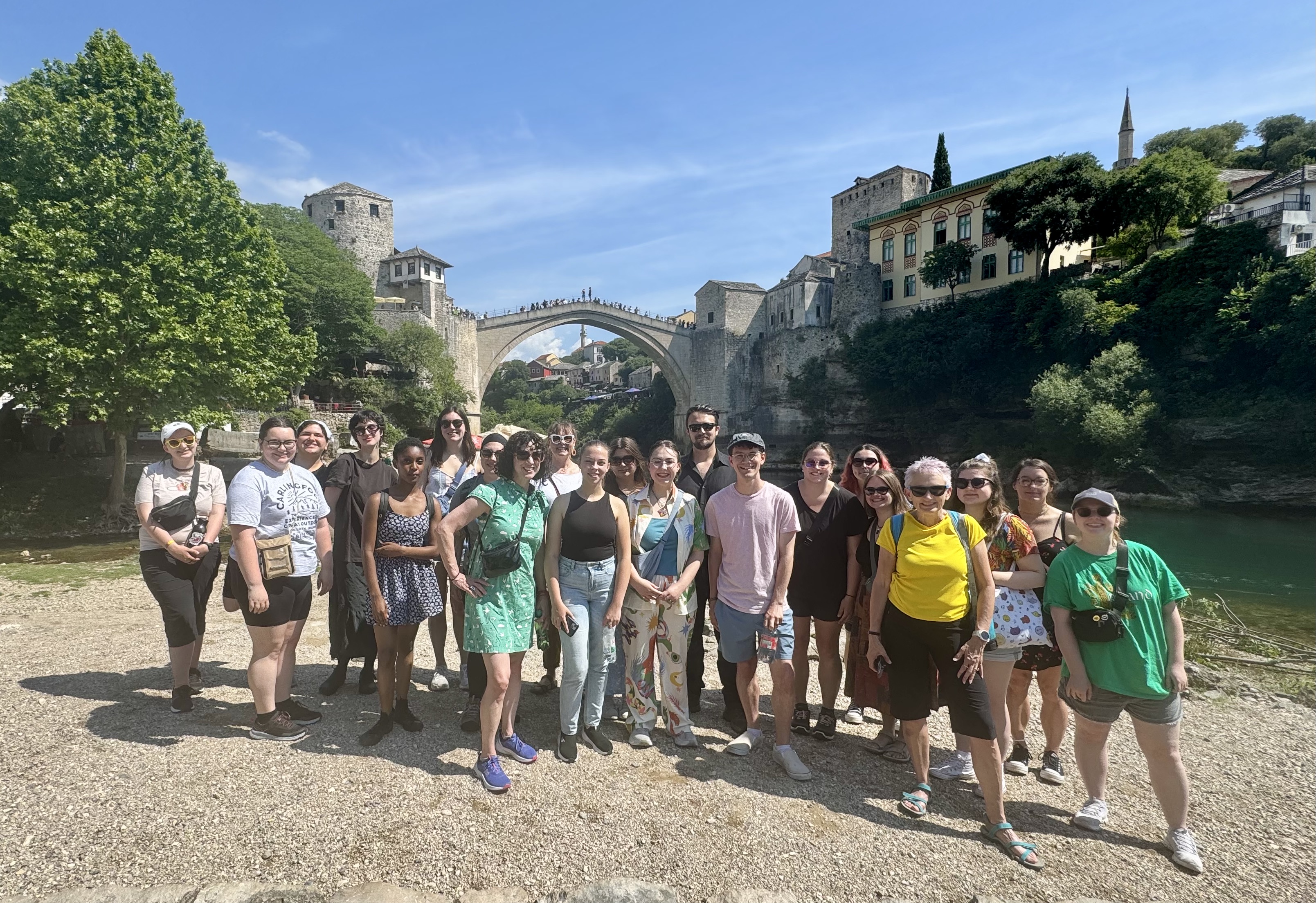
2024: Gender in Post-Conflict Zones
This interdisciplinary study abroad class introduced students to the role of gender in (post-)conflict zones by considering the unique histories, political economies, demographics, art, literature, and cultures that contribute to violence. Focusing on the experiences of women, we learned about how the aftermath of conflict affects systemic inequality and everyday life. Students visited a variety of key sites and met a variety of actors (politicians, educators, activists, and leaders of nonprofit organizations), who have addressed the role of gender in the aftermath of The Troubles (1968-1998) in Northern Ireland and the Yugoslav wars in the 1990s.
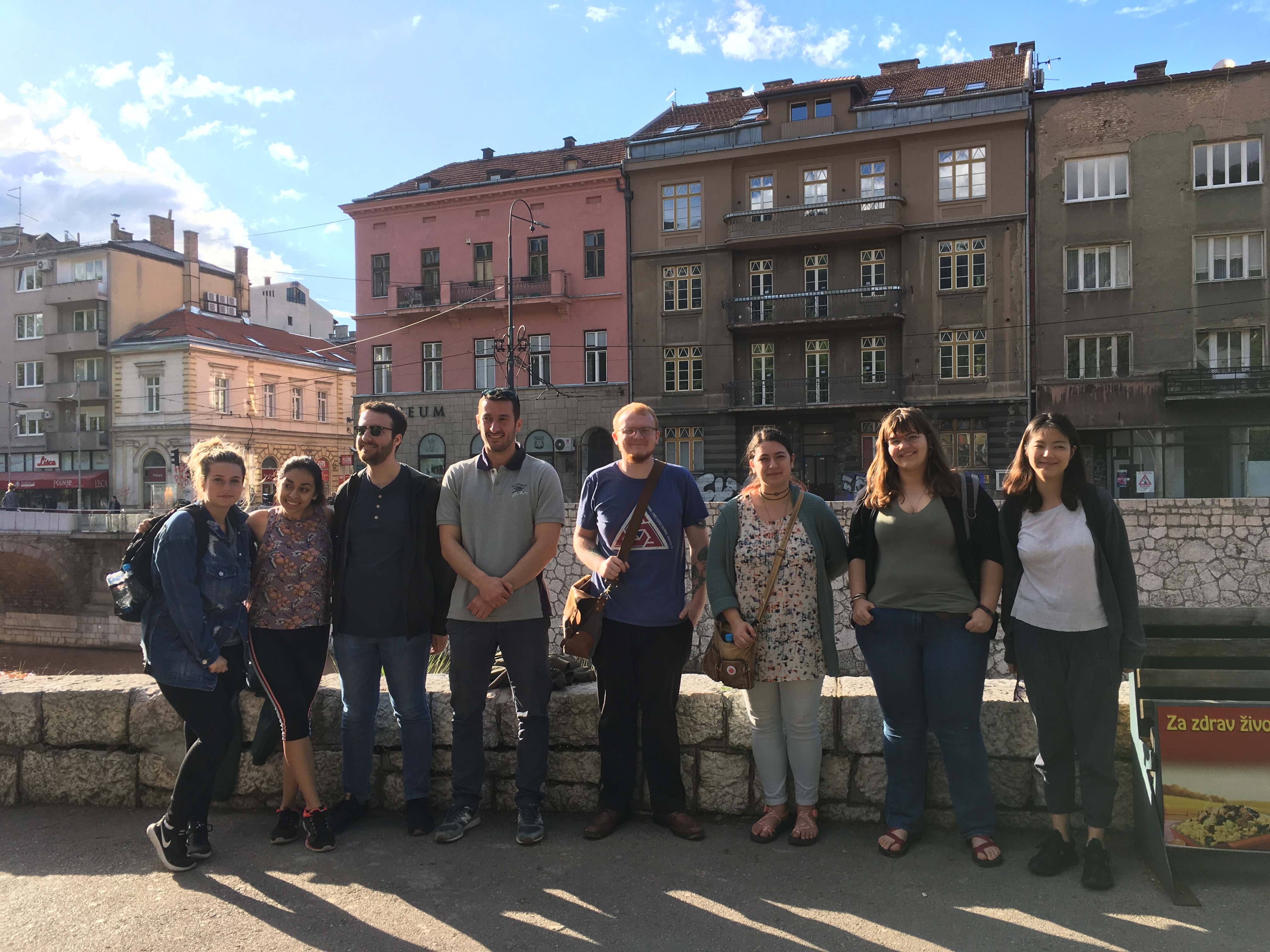
2019 Urban Ethnographic Field School to Bosnia and Herzegovina
This 3-week field school in the summer of 2019 brought students from Indiana to Bosnia-Herzegovina to study three different Bosnian cities: Sarajevo, Zenica, and Mostar.
Ethnographic Methods


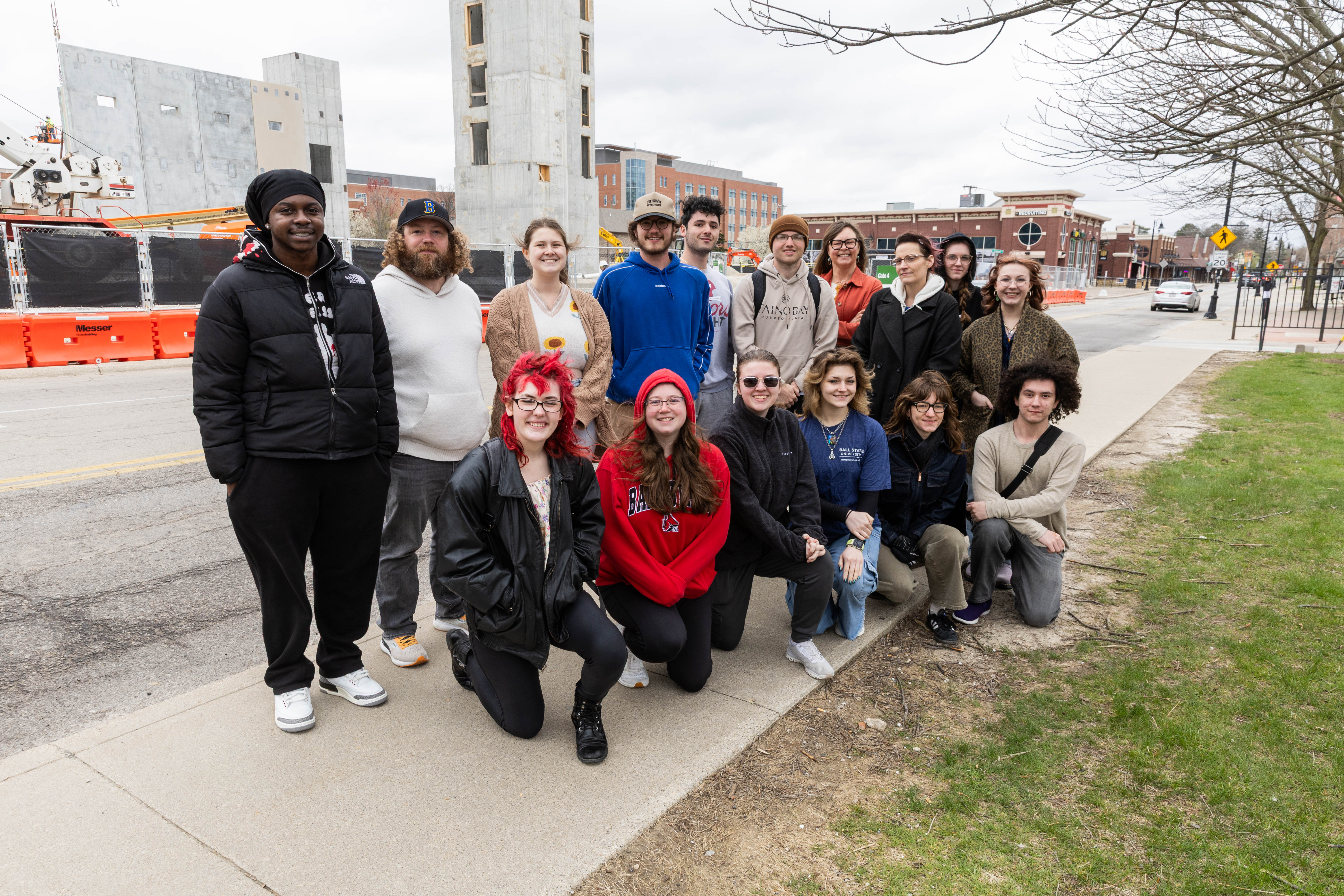
In 2016, I led 15 undergraduate and graduate students in an ethnographic methods course that studied the Riverside/Normal City neighborhood in Muncie, located east of the Ball State University campus. The class website can be found here.
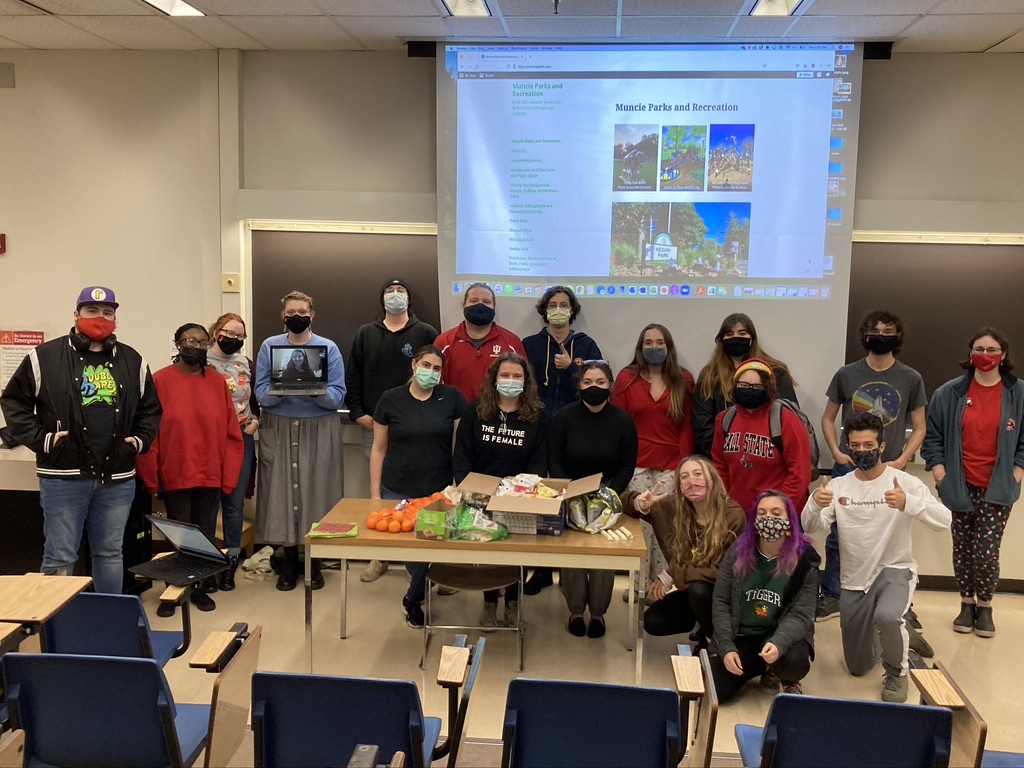
In 2021, 24 students and I conducted ethnographic research on Muncie Parks and Rec. Divided into 4 teams, students conducted participant observation and interview in Muncie’s largest and oldest parks to better understand the role of public space in Middletown, U.S.A. The class website can be found here.
In 2025, students worked with me to better understand the social, political, and economic implications for the Village Revitalization project at Ball State. Students worked to understand the relationship between cities and universities as well as urban anthropology more broadly. We explored the role of public and private space in higher education and in cities and conducted archival, ethnographic, and quantitative research. The website of our finding can be found here.
Anthropology of Everyday Life
This course is an introduction to anthropology and how we study everyday life. We learn to to connect the particular to the universal and to examine our own meaning and purpose in life in a globalizing world.
History and Theory of Anthropology
The primary purpose of this course is to help students understand the importance of theory in an anthropologist’s methodological toolkit and how anthropological theory, like the discipline as a whole, is shaped by political, economic, and social influences.
Applied Anthropology
Anthropology has been “applied” in various forms throughout its history, but it took root in the discipline in the middle of the twentieth century. This course explores some of applied anthropology’s most significant origins, debates, and applications. Ultimately, the course seeks to locate today’s applied anthropology within a larger disciplinary tradition that is both critical and engaged, and to explore possibilities for a new terrain beyond the “practice” versus “theory” chasm.
Race and Power
Race is one of the most powerful and deeply embedded social constructs in the modern world, but looks different across time and space and must be understood in both local and global contexts. My course on race and power examines the ways in which race is co-constructed with class, gender, and nation in a variety of contexts.
Gender and Feminism
I teach introductory, intermediate and graduate-level courses about the role of gender, sex, and sexuality in society that draw information from a variety of sources. “Gender” is a powerful force, something that shapes an individual’s or a group’s identity, power, influence, and authority. These courses investigate categories of gender in anthropology, in contemporary public and private life, the politics of reproduction, and . We discuss how gender intersects with race, ethnicity, class, religion, nation, and sexuality, and how these intersections affect people in a variety of ways.
Anthropology of the United States
This class explores the culture and political economy of the contemporary United States through an ethnographic lens.
Urban Anthropology
The goal of this course is to look at the ways in which urban anthropologists work – theoretically and methodologically – to understand the interaction between structural forces and culturally produced meaning and action on the ground.
International Women’s Issues
WGS 220 is an interdisciplinary introduction to international women’s studies with an emphasis on contemporary issues framed by historical context. Students will learn how gender is produced historically and in culturally specific ways. The course emphasizes a transnational approach to women and gender studies, insisting that gender cannot be understood alone but is rather part of a larger constellation that includes histories of colonialism, contemporary globalization, transnational mobilities, and capitalist production and consumption.
Introduction to Women’s and Gender Studies
Women’s and Gender Studies is an interdisciplinary field. In this class, we use texts and tools from many different disciplines – history, sociology, anthropology, philosophy, biology, and others – to better understand sex, gender, sexuality, and feminism.
 Jennifer Erickson